By agency reports
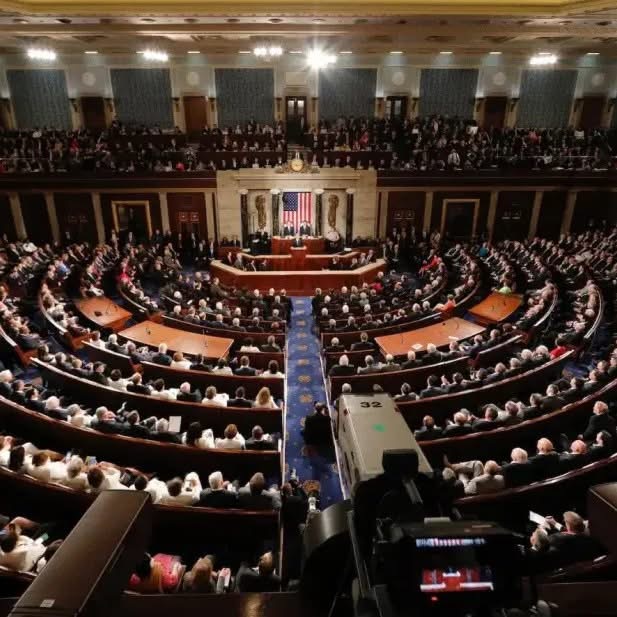
The United States Congress on Wednesday held a high-profile session to examine allegations of Christian genocide in Nigeria.
The joint hearing is titled “Defending Religious Freedom Around the World.”
The session featured several key witnesses testifying before the House Foreign Affairs Committee in Washington, D.C..
The event is part of a broader focus on global religious freedom, and Nigeria is once again under intense scrutiny.
It was convened by the House Foreign Affairs Committee’s Subcommittee on Africa and the Subcommittee on the Western Hemisphere.
Witnesses released their written testimonies ahead of the session.
In their pre-filed statements, witnesses cautioned that religious violence in Nigeria could escalate into broader Christian–Muslim conflict, if left unchecked.
Some described the situation as one where Christian worshippers face disproportionate threats from militant groups and weak governance structures.
With this development, Nigeria is bracing for a moment of rare and uncomfortable global scrutiny as the United States Congress prepares to reopen debate on what lawmakers and expert witnesses now describe as a deepening crisis of religious freedom—one with Nigeria at its violent core.
Ahead of the joint hearing of the US House Foreign Affairs Committee scheduled for Wednesday, written testimonies submitted to Congress paint a grim picture.
The testimonies include those recurring mass killings, forced displacement, and chronic insecurity that witnesses say point to something more dangerous than random violence—an emerging religious conflict with regional and global consequences.
The Committee’s mandate is blunt: assess what US lawmakers see as escalating threats to religious freedom worldwide and the failure of existing international responses to contain them with Nigeria featuring prominently and ominously.
“The deadliest place to be a Christian”
Among the scheduled witnesses is former US Ambassador-at-Large for International Religious Freedom, Sam Brownback, whose written testimony is unflinching in both tone and implication.
Brownback identifies Nigeria as a central battlefield in what he describes as a widening campaign by radical militant Islamist movements seeking religious dominance.
According to him, Nigeria and Syria have become “key focus areas” in these movements’ expansionist ambitions—spaces where state weakness, insecurity, and ideological extremism intersect with devastating results.
He characterises Nigeria as “the deadliest place on the planet to be a Christian,” warning that patterns of violence across the country resemble early warning signs of a much broader religious war, not just a domestic security crisis.
In his assessment, Nigeria is no longer a peripheral concern—it sits at the epicentre of a looming continental catastrophe.
Brownback goes further, framing religious freedom not merely as a moral cause but as a strategic weapon.
Faith communities under attack, he argues, are among America’s most natural allies in the global struggle against authoritarianism and violent extremism. To abandon them, he warns, is to surrender moral and geopolitical ground.
He also raises alarms over foreign involvement in Nigeria’s security ecosystem, cautioning that support or influence from powers such as China, Russia, Turkey, and Saudi Arabia—if left unchecked—could aggravate instability rather than resolve it.
Failure to act decisively now, he suggests, risks allowing Nigeria’s violence to spiral into mass atrocities reminiscent of Iraq’s darkest years.
A global crisis, not a local anomaly
Another key witness, Dr Stephen Schneck, former chair of the US Commission on International Religious Freedom, broadens the lens.
In his testimony, delivered in a private capacity, Schneck describes freedom of religion or belief as being in a historic global crisis, driven by rising authoritarianism, religious nationalism, and state collapse.
Nigeria, alongside Syria and Sudan, is cited as a prime example of how weak governance creates fertile ground for persecution.
In such environments, armed groups, insurgents, and criminal networks exploit religious identity, turning faith into both a weapon and a fault line.
Schneck notes that these countries host entities previously designated as serious threats to religious freedom—an indication, he argues, of how deeply entrenched and dangerous the situation has become.
The result is predictable: killings, mass displacement, and long-term instability that spills beyond national borders.
Notably, Schneck reserves some of his strongest criticism for Washington itself.
He argues that the United States has failed to live up to the spirit or letter of its own International Religious Freedom Act, relying too heavily on rhetoric, symbolism, and sporadic displays of force rather than sustained, strategic engagement.
He points to delays in releasing State Department religious freedom reports and the absence of updated designations of Countries of Particular Concern as evidence of institutional drift.
Nigeria, he notes, now stands as the only country currently carrying that designation—an anomaly he calls deeply troubling at a time when repression is intensifying in places like China and Iran.
Schneck also warns against reducing the issue to Christian persecution alone. Religious freedom, he insists, is universal. Selective advocacy may score political points, but it ultimately weakens legitimacy and effectiveness.
Nigeria’s Federal Government has consistently rejected claims of systemic religious persecution, insisting that insecurity affects citizens across all faiths and regions.
Abuja maintains that what the country faces is a complex security challenge driven by terrorism, banditry, and criminal violence—not a religious war.
Yet actions taken by Washington suggest lingering doubt.
Last year, President Donald Trump redesignated Nigeria as a Country of Particular Concern, a move accompanied by unusually blunt warnings, including the possibility of military action.
On Christmas Day, US forces reportedly struck terrorist hideouts in Sokoto, escalating tensions and speculation about deeper involvement.
Diplomatic engagement has since intensified. In November 2025, US Secretary of War Pete Hegseth hosted Nigeria’s National Security Adviser, Nuhu Ribadu, at the Pentagon for high-level talks.
Ribadu later confirmed hosting a US congressional delegation in Abuja, with discussions centred on counterterrorism cooperation, regional stability, and strengthening bilateral security ties.
Just last month, both countries convened a plenary session of the Nigeria–US Joint Working Group to specifically address Nigeria’s controversial designation and the broader implications for the relationship.
As US lawmakers gather in Washington, the testimonies before them frame Nigeria not as a distant tragedy, but as a test case—of global resolve, of moral consistency, and of whether early warnings will once again be ignored until violence becomes irreversible.
For Nigeria, the hearing signals something equally stark: the world is no longer merely watching. It is beginning to judge.