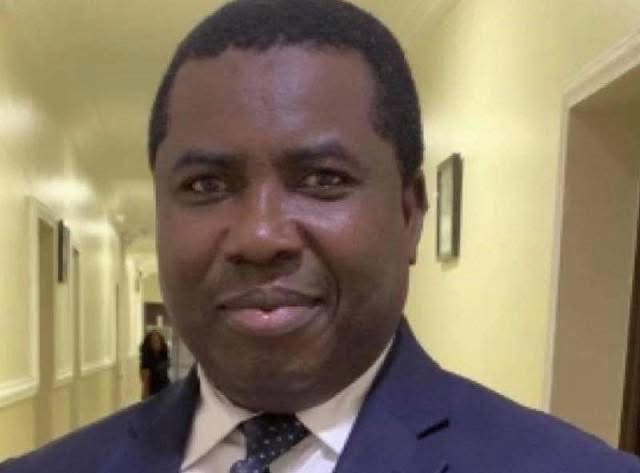
“He reported reality as he experienced and understood it. To condemn him for this is neither fair nor honest; it is an attempt to punish speech rather than confront violence.“
By Aliyu Ammani
For years, Boko Haram and armed bandits have laid waste to large swathes of Northern Nigeria.
They have killed indiscriminately, razed communities, destroyed livelihoods, and reduced once-thriving villages to ‘kufayi’.

In the North-West, the activities of these bandits have descended into a level of barbarity that defies logic: mass killings, rape, and the horrific spectacle of human beings burned alive.
The perpetrators are largely Fulani and identify as Muslims. Their victims, overwhelmingly, are also Muslims.
Yet, in a tragic irony, a significant segment of the vocal Muslim leadership has often chosen sympathy, silence, or rationalization (giving excuses) over outrage and resistance.
Rather than encouraging condemnation, many influential voices within the community have actively discouraged public complaint. Victims are frequently urged to endure their agony in silence.
They are reminded that the bandits are “their brothers” or are told to pray for the strength to survive what is framed as a “divine test.” Some scholars have even portrayed this banditry as a punishment from God for sins committed by the very people being slaughtered.
In this narrative, the victims are not only murdered; they are blamed for their own demise.
Public discussion of this crisis is often stifled. When it does occur, it is frequently wrapped in sociological justifications and calls for “negotiation.”
We are told that “fire-for-fire” is unwise, and instead, patience and dialogue (so-called peace deals) are endlessly prescribed, even as blood continues to soak the soil.
However, the victims of Fulani banditry and terrorism are not exclusively Muslim. Northern Nigeria is also home to Christians who refuse to accept silence as a virtue or massacre as destiny.
Unlike their Muslim counterparts, they have cried out loudly and persistently.
They told the world that armed Fulani groups, identifying as Muslims, were killing them. While we know that the motives of bandits are often more criminal than theological, the Christian community reported the reality they saw: a perceived religious onslaught.
Because they spoke, the world listened. And because the world listened, the international community finally began to grasp the scale of the carnage affecting both Christians and Muslims in the North.
Predictably, a curious reaction emerged. Some Muslim leaders protested, arguing that “it is not only Christians who are being killed; more Muslims are dying.”
While factually true, this raises an uncomfortable question: Where were these voices before now? Which Sharia councils or prominent clerics cried out with such consistency when the victims were primarily Muslim?
The world remained ignorant of the scale of Muslim suffering because the victims were pressured into silence by a mixture of misplaced solidarity and self-denial. Their pain was internalized, their grief “managed,” and their voices muted.
Now that the Christian community has broken that silence, certain institutions seem less concerned with the killings themselves and more disturbed by the exposure.
This is the subtext of the current outrage directed at Professor Joash Amupitan (SAN), the Chairman of the Independent National Electoral Commission (INEC).
What is his “crime”? He joined those who spoke out about the atrocities committed against their people.
He reported reality as he experienced and understood it. To condemn him for this is neither fair nor honest; it is an attempt to punish speech rather than confront violence.
As I write, the killings continue. Innocent Nigerians of all faiths are being murdered and their homes destroyed.
In this context, the posture of the Supreme Council for Sharia is deeply troubling. Expending energy to demand the removal of an INEC Chairman, rather than unequivocally mobilizing against the terrorists and bandits, smacks of intimidation.
Sharia, at its core, is a system anchored in justice and fairness. It is not a tool for blackmail, nor an instrument of coercion.
To reduce it to a weapon of political intimidation is to strip it of its moral soul and betray the principles it claims to uphold.
The rational approach is to give Professor Amupitan the benefit of the doubt. If genuine signs of bias emerge in the exercise of his duties, our courts are equipped to address them.
But we must not disqualify a man for the “sin” of refusing to be silent in the face of slaughter.
Northern Nigeria does not need more excuses or more threats against those who dare to speak. It needs courage, especially from those whose voices carry the most weight.
Until that courage is shown, hypocrisy will continue to compound tragedy, and silence will remain an accomplice to violence.