By Ebere Agozie
Mr Peter Bakare, the President of the Organic and Agroecological Initiative in Nigeria (ORAIN), says the adoption of biochar innovation will address key challenges confronting agricultural practices in the country.
Bakare made this known at the January 2026 online edition of the monthly Upscaling of Organic and Agroecological Farming in Nigeria programme.
The meeting also featured the inauguration of the ORAIN Biochar Focus Group and Natural Poultry Production Work Group.

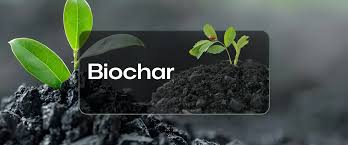
The News Agency of Nigeria (NAN) reports that biochar is an emerging sustainable solution for improving soil health, increasing crop yields and sequestering carbon to combat climate change.
Biochar utilises agricultural waste such as rice husks, cassava peels and coconut shells, enhancing nutrient efficiency by 20 to 40 per cent while reducing fertiliser costs.
Bakare emphasised that the newly inaugurated work groups would play a critical role in advancing sustainable agricultural practices and tackling challenges such as climate change, soil degradation and food insecurity.
According to him, the ORAIN Biochar Focus Group will be anchored by Teesside University, United Kingdom, in collaboration with the African Agriculture Knowledge Transfer Partnerships (AAKTP) Project Team and the University of Ibadan.
“The Natural Poultry Production Work Group will be led by the Ibadan Go Organic Multipurpose Cooperative Society, and both groups are open to interested stakeholders,” he said.
He reiterated ORAIN’s commitment to promoting sustainable, chemical-free farming systems aimed at enhancing food security, protecting ecosystems and improving livelihoods.
Bakare advocated the use of natural farming methods, including biochar technology, to address environmental challenges and Nigeria’s over-reliance on imported agricultural inputs.
He also urged farmers to adopt agroecological practices that work with nature to boost productivity while safeguarding the environment.
In her presentation, Dr Tannaz Pak lauded the valorisation of cassava biochar initiatives being implemented in Nigeria in collaboration with the University of Ibadan and the Niji Group.
Pak, who is the Lead Focal Person of AAKTP at Teesside University, expressed optimism that Nigeria’s growing leadership in biochar technology would inspire wider adoption across Africa.
She outlined key objectives of the Focus Groups to include knowledge sharing on biochar technology, policy advocacy and influence, strengthening stakeholder collaboration, and capacity building in biochar production and application.
According to her, other targets include contributing to national and continental carbon market initiatives, as well as leveraging existing policy frameworks to promote the use of agricultural biochar in Nigeria.
Meanwhile, a participant, Mrs Olukemi Fabiyi of the Agricultural Research Council of Nigeria (ARCN), raised questions on frameworks for academic and research collaboration.
Fabiyi explained ARCN’s coordinating role in agricultural research nationwide and proposed the use of its “Adopted Village Programme” to promote biochar awareness and field trials.
She added that ARCN manages government-funded demonstration farms where researchers work directly with farmers to implement agricultural innovations.
Another participant, Prof. Olushola Ibiyemi, highlighted the link between excessive fluoride consumption and dental health challenges, noting the potential of biochar in mitigating the problem.
Participants at the event joined from within and outside Nigeria and represented diverse stakeholders, including farmers, academics, researchers, agribusiness operators, non-governmental organisations and policymakers. (NAN) www.nannews.ng
Edited by Tosin Kolade