Group urges Buhari to withdraw Dariye, Nyame’s presidential pardons
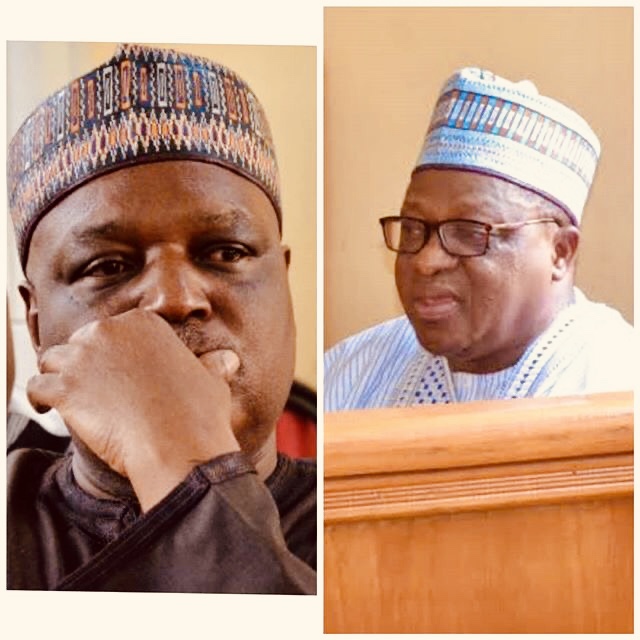
The Socio-Economic Rights and Accountability Project (SERAP) has asked President Muhammadu Buhari to withdraw the presidential pardons granted to former governor of Plateau State, Joshua Dariye and his Taraba State counterpart, Rev Jolly Nyame.
Dariye and Nyame, along with 157 others serving various jail terms, were granted pardons last week by the National Council of State. While Dariye was sentenced to 10 years imprisonment for stealing N1.16bn from the Plateau State ecological funds, Nyame was convicted for diverting N1.6bn of Taraba funds.
However, SERAP which made its request known in a letter to the president dated 16 April, 2022, and signed by its Deputy Director, Kolawole Oluwadare said that Buhari must withdraw the pardons for the duo in order to prov to be world that he was serious about the fight against corruption in the country.

The letter was copied to the Conference of the States Parties to the United Nations Convention against Corruption.
SERAP urged Buhari to urgently review the process, as well as “proposing a constitutional amendment to the National Assembly to reform the provisions on the exercise of the prerogative of mercy to make the provisions more transparent, and consistent and compatible with Nigeria’s international anti-corruption obligations.”
“The impunity for corruption will continue as long as influential politicians escape justice for their crimes,” SERAP said.
The group argued that the presidential pardon was clearly inconsistent and incompatible with the requirements of the Nigerian Constitution, and the country’s international obligations including under the UN Convention against Corruption.
The letter reads in part, “The presidential pardon for corruption cases is inconsistent with the rule of law, and the public interest, as it undermines the principle of equality before the law.
“SERAP is concerned that while the pardon power is routinely exercised to shield influential politicians and politically exposed persons from justice and accountability, ordinary people who have committed petty offences but with no money or influential politicians to speak for them, languish in prisons and are rarely considered for pardon.
“While there is no doubt that Section 175 of the Constitution vests wide discretionary power in the Nigerian president to grant pardon, it does not stipulate the conditions under which such power should be exercised.
“However, when section 15(5) of the Constitution is read together with the oath, it would seem to impose some ethical conditions on you to ensure that the exercise of the discretionary power of the prerogative of mercy is not such that it will encourage corruption or impunity of perpetrators.
“Mr Dariye and Mr Nyame should have been allowed to complete their jail terms. The exercise of the presidential pardon in their cases would seem to be unfair and undeserving.
“The investigation and prosecution of the corruption cases involving the pardoned former governors Dariye and Nyame reportedly cost over N300 millions of taxpayers’ money.
“The cases went from the High Court to the Supreme Court of Nigeria.
“The constitutional power of prerogative of mercy ought not to be an instrument of impunity.”