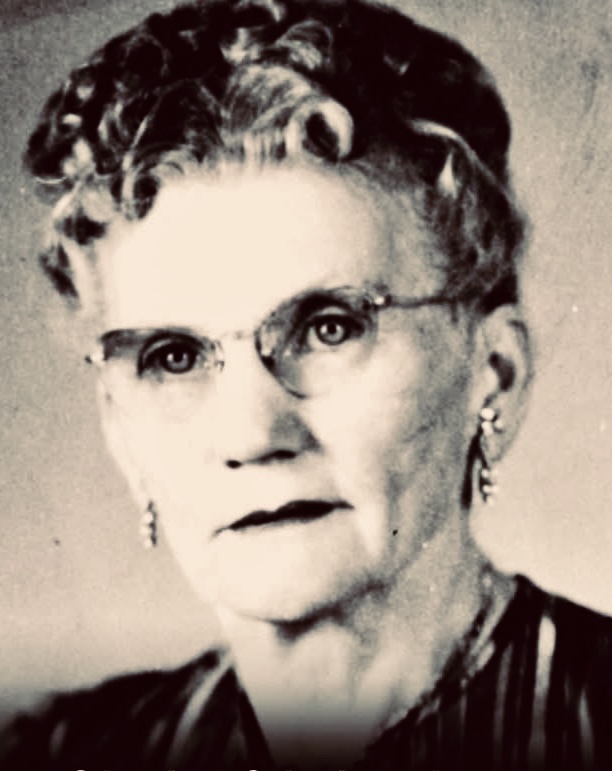
By agency reports
Fall, 1905. Susan Quinn stepped off the train in Miles City, Montana, and realized she’d made a terrible mistake.
She was seventeen years old. She’d just married Daniel Haughian in their hometown of Kilkeel, Ireland, where they’d been childhood friends. Daniel had been working in Montana for years, building a sheep ranch. He’d come back to marry her and bring her to America to start their life together.
“It’ll be grand,” he’d promised. “We’ve got land. We’ve got a home.”

What Daniel failed to mention was that the “land” was sixty miles north of Miles City in the middle of nowhere, and the “home” was a three-room log cabin at the base of Little Sheep Mountain with no neighbors for miles.
Daniel hired a team and lumber wagon, filled it with what he called “grub”—beans, peas, ham, bacon, canned milk and fruit—and started driving north.
Susan kept looking for the main trail. She didn’t realize the wagon track they were following WAS the trail.
When they finally arrived after a day of travel, Susan stared at her new home: a rough log cabin, some corrals, a few sheds, and an overwhelming amount of empty prairie stretching in every direction.
She was seventeen years old, thousands of miles from Ireland, and this was her life now.
Susan could have spent those early years crying about what she’d left behind. Instead, she started paying attention.
She watched how Daniel managed the sheep. She learned which springs had reliable water. She noticed which homesteaders were succeeding and which were failing. And most importantly, she understood something Daniel didn’t: in Montana, land was everything.
When neighboring homesteaders gave up and abandoned their claims, Susan convinced Daniel they should buy the land. Not for the buildings—those were worthless. For the water rights. For the grass. For the future.
Over the next twenty-five years, while raising their children, Susan quietly acquired every abandoned homestead around their original claim. While Daniel managed the sheep and cattle, Susan built an empire.
By 1931, they had expanded significantly. They had ten children—five sons and five daughters. The ranch was profitable. They were building something that would last generations.
Then, on Valentine’s Day 1931, Daniel Haughian died suddenly.
Susan was forty-four years old. Ten children. A ranch with thousands of sheep and cattle. No husband. And everyone in Miles City watching to see if she’d sell everything and move back to Ireland where a widow belonged.
Susan had other plans.
She gathered her five sons—some still teenagers—and made an announcement: “We’re not selling. We’re expanding.”
The banker nearly laughed when Susan walked into his office requesting loans to purchase more land. A widow? With children to raise? Wanting to buy MORE ranch land during the Great Depression?
But Susan had something most borrowers didn’t: a track record. She’d been acquiring land for years. She knew what she was doing. And she had a strategy that made perfect sense: buy land first, livestock second.
“Land doesn’t die in a drought,” she explained. “Cattle do. But if you own the land and the water, you can always get more cattle.”
The banker approved the loan. It was the first of many. Susan became known as “the banker’s darling”—not because she was charming, but because she always paid back every penny, on time, with interest.
Through the 1930s, while most ranchers were losing everything, Susan was buying. Dried-up homesteads. Failed ranches. Abandoned claims. If it had water or grass, Susan Haughian wanted it.
She sent her sons out to manage different properties. She kept meticulous books. She worked eighteen-hour days managing an empire that sprawled across eastern Montana. And she did it all while raising her five daughters to be “wives and mothers”—though they also learned bookkeeping, land management, and how to run a ranch empire.
In 1932, Susan formalized the operation: Susan Haughian and Sons, later renamed Haughian Livestock Company.
By the early 1940s, the Haughian ranch was legendary. But Susan’s greatest test came when all five of her sons enlisted to fight in World War II.
Every single one of them. Gone. Across the ocean. Fighting a war.
Susan, now in her fifties, moved to a house in Miles City, set up an office, and ran the entire cattle empire by herself. Alone. Without her sons. Managing multiple ranches, thousands of head of cattle and sheep, dozens of employees, and business decisions that affected hundreds of people.
The men of Miles City watched, waiting for her to fail.
She didn’t.
When her sons came home from the war—all five of them, alive—they found the ranch not just surviving, but thriving. Their mother had expanded operations. The Haughian name was now synonymous with successful ranching in Montana.
In 1952, Collier’s Magazine sent a reporter to Miles City to write about this Irish immigrant who’d built one of the largest ranching operations in Montana.
The story was titled “Montana’s Favorite Redhead.” It celebrated Susan Haughian, the “Cattle Queen of Montana,” who controlled over 240,000 acres of Montana rangeland.
To put that in perspective: 240,000 acres is 375 square miles. It’s larger than New York City. It’s bigger than many European countries.
Susan Haughian, the seventeen-year-old girl who’d arrived at a log cabin in 1905, now controlled an empire.
But here’s what made Susan different from other cattle barons: she never forgot where she came from.
She remained president of St. Thomas Aquinas Altar Society. She was active in the Soroptimist Club. She supported the Range Riders Reps, the Caledonian Society, the Half Century Club, and the Cow Belles. She mentored young ranchers. She helped families who were struggling.
When the Milwaukee Railroad needed to name a station near the mouth of Custer Creek, they named it “Susan”—in honor of the woman and her sons who owned the surrounding land.
A railroad station. Named after an Irish immigrant. Who’d arrived with nothing.
The Collier’s Magazine article inspired Hollywood. In 1954, they made a movie called “Cattle Queen of Montana,” starring Barbara Stanwyck and Ronald Reagan. It was complete fiction—the real Susan Haughian’s life was far more interesting than anything Hollywood could invent.
Susan lived to see her grandchildren and great-grandchildren. When she died on August 16, 1972, at age 84, she was worth millions. She’d seen Montana transform from frontier territory to modern state. She’d lived through two World Wars, the Great Depression, and the social upheavals of the 1960s.
She was buried next to Daniel in Old Calvary Cemetery in Miles City.
At her funeral, they talked about the empire she’d built. The 240,000 acres. The thousands of cattle. The fortune she’d amassed.
But the real legacy was simpler: forty-five grandchildren and twenty-four great-grandchildren. An empire still in family hands. And a lesson she’d taught them all.
“Never sell the land,” Daniel had told her in 1905.
Susan had taken that advice and built something that would outlast them both.
Today, the Haughian ranches are still operating. Still family-owned. Still following the principles Susan established: buy land before livestock, manage water carefully, work harder than everyone else, and never, ever give up.
The log cabin where Susan first arrived is long gone. But the empire she built from that humble beginning still stretches across eastern Montana, testament to what a seventeen-year-old Irish immigrant could accomplish with determination, intelligence, and absolute refusal to accept limitations.
They called her “Montana’s Favorite Redhead.” They called her the “Cattle Queen of Montana.” Hollywood made a movie about a fictionalized version of her life.
But Susan Quinn Haughian was something more important than a colorful nickname or a movie character. She was a widow who turned grief into ambition. An immigrant who turned a log cabin into an empire. A mother who raised ten children while building one of the largest ranching operations in American history.
She was seventeen when she arrived in Montana with nothing but a husband and a dream.
She was eighty-four when she died, having built something that still stands today.
And somewhere in Miles City, there’s still a railroad station that bears her name—a small monument to the Irish girl who became a Montana legend.