

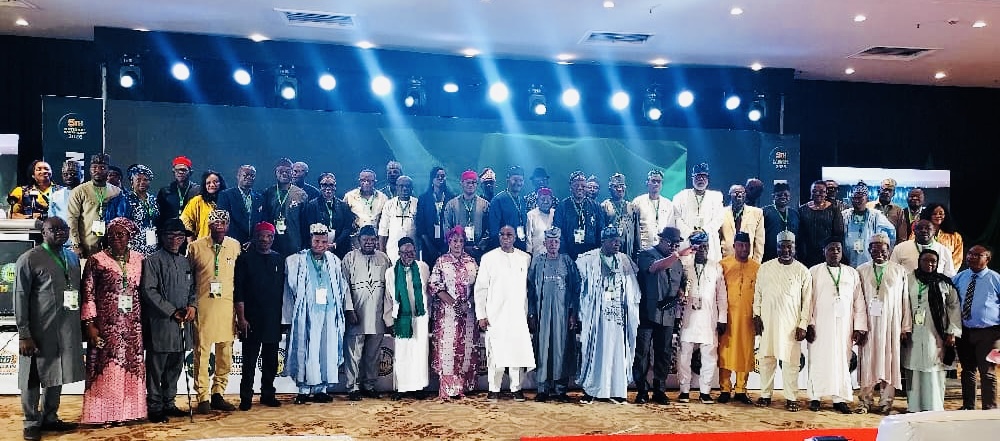
The Forum of Former Deputy Governors of Nigeria (FFDGN) has called for reforms in leadership recruitment, greater representation of women and young people in governance, and stronger accountability in public service.
The Forum made the call in a communiqué issued on Thursday at the end of its fifth national conference, held in Abuja from Oct. 20 to Oct. 21.
The communiqué was signed by Dr Chris Akomas, FFDGN National Chairman, Hazeem Gbolarumi, Deputy National Chairman (South), and Mukhtar Anka, Deputy National Chairman (North).
The conference, chaired by former Katsina Governor Aminu Bello Masari, with former Delta Governor Ifeanyi Okowa as co-chairman, had the theme, “Rethinking Nation-Building: Bridging the Leadership-Citizen Disconnect Through Orientation, Attitude, Character, Culture and Tradition for Sustainable Development.”

The Forum said Nigeria’s leadership recruitment process needed to be reassessed to promote the emergence of credible leaders capable of earning public trust and securing legitimacy to govern.
It also called for recruitment into the public service to be based on competence, character and merit.
To promote inclusion, the Forum urged the Federal Government to introduce gender quotas reserving executive positions and legislative seats for women, young people and marginalised minorities at federal, state and local government levels.
It recommended a strategic communication framework requiring public officials to communicate openly and honestly about government achievements and challenges to reduce public suspicion of governance.
The Forum called for the full implementation of clear service standards across government institutions, including specified processing timelines, communication requirements, accessibility provisions and channels for complaints and feedback.
On security, it commended the Federal Government and security agencies for their efforts to secure the country, urging sustained investment in security agencies to improve their operational efficiency.
It also urged the government to harness Nigeria’s youthful population, agricultural and solid mineral resources, as well as its intellectual and technological capacity, to drive nation-building and sustainable development.
The Forum identified the completion of the Ajaokuta Steel Complex as one of the measures needed to advance national development.
It encouraged political leaders to support young people in digital innovation and creativity, while calling for an effective regulatory framework for artificial intelligence.
On national values, the Forum recommended sustained advocacy and public enlightenment on Chapter Two of the 1999 Constitution, as amended, which contains the Fundamental Objectives and Directive Principles of State Policy, to promote patriotism.
It also urged governments at all levels to preserve and adapt enduring cultural practices to strengthen ethical leadership, social cohesion and national development.
The Forum called for the promotion of family and community loyalty, as well as mutual respect between leaders and citizens.
It recommended an effective reintegration programme for former convicts and urged the formalisation and strengthening of ward-level consultative assemblies involving community representatives to improve communication between elected representatives and citizens.
The Forum also called for improved teachers’ remuneration, saying better welfare would strengthen their role as models for younger generations.
It urged a clear constitutional definition of the role of traditional rulers to enhance their contributions to cultural preservation and governance.



