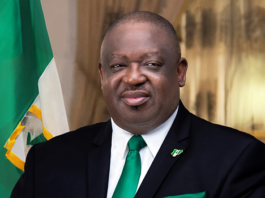
Rabiu Kwankwaso
“If 2027 mirrors 2023 — if the opposition fragments again, if Tinubu secures a second term because the North could not present a united front, if Kwankwaso refuses once more to subordinate his ambition for a northern victory — then the North will have a clear answer to the question.”
By Mohammed Doka
Is Rabiu Musa Kwankwaso secretly working for President Bola Tinubu to divide the North? The question is deliberately provocative.
But after examining the former Kano governor’s political trajectory, his serial defections, his refusal to unite with fellow northerners, and his relentless pursuit of a presidential ambition that he — if he is honest with himself — knows he cannot achieve, the evidence becomes uncomfortably compelling.
Whether by design or by vanity, Kwankwaso is emerging as the single most destabilising political force in Northern Nigeria, and the North may never forgive him if 2027 mirrors the fractured tragedy of 2023.
The Mathematics of Betrayal: What 2023 Taught Us
Let us recall the cold, unforgiving arithmetic of the 2023 presidential election. Bola Tinubu of the APC won with 8,794,726 votes. Atiku Abubakar of the PDP scored 6,984,520. Peter Obi of the Labour Party polled 6,101,533. And Rabiu Musa Kwankwaso of the NNPP came a distant fourth with just 1,496,687 votes — a mere 6.23 per cent of the total votes cast.
Now consider the devastating implication. The combined opposition votes totalled over 14.5 million — dwarfing Tinubu’s figure by nearly six million votes. Together, they represented 65.9 per cent of the electorate, enough to sweep the APC out of Aso Rock.
Yet, because Kwankwaso refused to step aside or subordinate his ambition to a united northern coalition, Tinubu walked into the presidency.
Within the PDP itself, a party chieftain, Murtala Adamu Kimba, publicly blamed Kwankwaso and Obi’s departures — alongside the G-5 governors’ revolt — for Atiku’s defeat, lamenting that “the party failed to bring them back on board.”
Kwankwaso knew his numbers. He knew he had no path to victory. He finished fourth. Yet he ran anyway. And the North paid the price.
The Kwankwaso Enigma: A Kingmaker Who Refuses to Make Kings
Kwankwaso’s political history is a chronicle of serial abandonment unmatched in Nigeria’s Fourth Republic. He was first elected governor of Kano in 1999 on the platform of the Peoples Democratic Party (PDP).
After losing re-election in 2003, he returned to the PDP in 2011 and governed again until 2015. In November 2013, he staged a walkout from the PDP’s national convention alongside five other governors and defected to the freshly formed APC.
But in 2018, he defected again — leaving the APC and rejoining the PDP alongside fourteen APC senators. When that didn’t yield the presidency, he left the PDP once more, founding the New Nigeria Peoples Party (NNPP) ahead of the 2023 elections.
In January 2026, his political protégé, Governor Abba Kabir Yusuf, defected from the NNPP to the APC, taking with him dozens of Kwankwasiyya loyalists, all but four members of his State Executive Council, all members of the State House of Assembly, and all 44 local government chairmen.
It was, by any measure, a political earthquake — his own godson, the man married into his family, abandoning him barely three years after being elected governor.
In response, Kwankwaso himself defected from the NNPP to the African Democratic Congress (ADC) in March 2026, announcing his resignation in a statement dated March 29, 2026, citing “the need for a strategic political realignment amid the evolving dynamics of Nigeria’s political landscape.”
Within weeks of that defection, the ADC descended into its own leadership crisis. By May 2, 2026, the Kwankwasiyya movement had already announced that it was considering leaving the ADC for yet another platform — the National Democratic Congress (NDC).
A Kwankwasiyya spokesperson confirmed that the group and its leader had “resolved to leave the ADC and join the NDC.”
A party every two years. A platform every election. A consistency of personal ambition and a profound inconsistency of institutional loyalty.
Aminu Kano’s Legacy, Distorted
Some of Kwankwaso’s admirers have had the audacity to compare him to the late, great Mallam Aminu Kano — a founding father of northern progressive politics, a man who fought for the talakawa (common people) with ideological conviction and institutional permanence.
The comparison is an insult to Aminu Kano’s memory. The late Mallam did not defect every election cycle. He did not abandon his political home because another platform offered a more convenient route to personal ambition.
He built institutions — the Northern Elements Progressive Union (NEPU), the People’s Redemption Party (PRP) — that outlasted him. Kwankwaso has built only one lasting institution: a personality cult called Kwankwasiyya that moves wherever he moves, like a caravan without a compass.
In the history of Kano politics, the pattern of godfathers and godsons betraying each other is well-established, from the historic rift between Aminu Kano and his protégé Muhammadu Abubakar Rimi to the recent defection of Kwankwaso’s own protégé, Governor Abba Yusuf. But no single figure has defected more times or caused more fragmentation than Kwankwaso himself.
The Kano Mirage: A Regional Strongman, Not a National Leader
Kwankwaso’s defenders point to his landslide victory in Kano State during the 2023 presidential election, where he secured 997,279 votes, winning 36 of the 44 local government areas.
It was indeed a spectacular performance. But it was also a spectacular mirage — one that has convinced Kwankwaso that he carries the North on his shoulders.
The reality is sobering. Outside Kano, Kwankwaso’s influence evaporates. Even his own factional NNPP chairman, Dr. Agbo Major, has publicly questioned Kwankwaso’s national electoral strength, noting bluntly that “his influence appeared limited to Kano State despite contesting as a presidential candidate.”
Major added devastatingly: “How is he a viable opposition candidate? He has all the leverage but ended up winning only Kano State.”
When even your own party chairman says you cannot win, it is time for an honest reckoning. Kwankwaso is not a northern leader. He is a Kano leader — and increasingly, a diminished one at that.
The Kwankwasiyya House Is Burning
The signs of Kwankwaso’s declining grip on Kano politics are unmistakable. His protégé, Governor Abba Kabir Yusuf, defected from the NNPP to the APC in January 2026 — less than two years to the next general election — taking with him the entire political structure of Kano State.
Abba did not go alone. He crossed over with dozens of former Kwankwasiyya loyalists, all but four members of his State Executive Council, all members of the State House of Assembly, and all 44 local government chairmen.
The Kwankwasiyya movement described the defection as a “gross betrayal,” and Kwankwaso himself declared January 23 as the “World Day of Betrayal.” But as many political observers in Kano quickly point out, if defection is betrayal, then Kwankwaso wrote the book on it.
Having defected from PDP to APC in 2013, from APC to PDP in 2018, from PDP to NNPP in 2022, from NNPP to ADC in March 2026, and now preparing to defect from ADC to NDC in May 2026 — he is the last politician entitled to lecture any Kano politician on party loyalty.
Dr. Agbo Major, the factional NNPP chairman, issued a chilling warning about Kwankwaso’s political style: “Kwankwaso will always come as a gentleman at the beginning, but by the time those around him begin to influence him, they will set ADC on fire,” adding that “what ADC has succeeded in doing is to inherit a baggage that will later turn to a menace within their fold.”
That baggage is now being passed to the NDC. And another opposition platform will burn.
The North Is Bleeding, and Kwankwaso Is Playing Games
While Kwankwaso moves from party to party in pursuit of a presidential fantasy, the North is enduring one of its most brutal humanitarian crises in decades.
According to the World Food Programme (WFP), nearly 35 million people in northern Nigeria are projected to face severe food insecurity from June to August 2026 — the highest figure recorded in Nigeria since monitoring began.
In Borno State alone, 15,000 people are projected to face “catastrophic food insecurity” — the highest level under the global standard for measuring food insecurity. Malnutrition rates are highest among children in Borno, Sokoto, Yobe, and Zamfara.
In July 2025, WFP was forced to scale down nutrition support for lack of funds, affecting more than 300,000 young children.
In the 2025 Global Hunger Index, Nigeria ranked 115th out of 123 countries — a shameful position for the supposed “giant of Africa.” The country’s GHI score of 32.8 reflects “serious hunger,” driven by the high proportion of undernourished people, with 19.9 per cent of the population lacking adequate food intake.
Meanwhile, insecurity continues its grim march. On November 21, 2025, 230 children were kidnapped from Saint Mary’s Catholic School in Niger State. Nigerian authorities paid a substantial ransom — estimated at several million dollars — for their release. Extremist violence from Boko Haram and armed bandits has displaced millions across the Lake Chad Basin.
This is the North that requires urgent, focused, united political leadership. Instead, it gets Kwankwaso — a man who cannot unite his own political camp, cannot settle in a single party for more than a few months, and cannot be honest enough to admit that after decades in public life, his moment has passed.
The 2027 Nightmare: History Repeating
Now, as 2027 approaches, all the signs suggest that Kwankwaso is preparing to repeat the same fatal mistake. The ADC, which was supposed to be the vehicle for a grand opposition coalition, is already fracturing.
According to a recent report, “the opposition is splintered. Neither Peter Obi nor Rabiu Kwankwaso said a word about” the Supreme Court’s recent ruling on the ADC leadership, “because they had already moved on” to the NDC.
Even more damningly, the same analysis makes a chilling observation: “Even now, the verbal darts between Atiku’s supporters and Obi’s and Kwankwaso’s supporters are more caustic and more venomous than the exchanges between either camp and Tinubu’s supporters.
In fact, Tinubu is the net beneficiary of their maximalist posturing and internal warfare. Obi and Kwankwaso supporters say they would rather let Tinubu continue for another four years than support Atiku’s aspiration.”
Let that sink in. Opposition supporters are openly declaring that they would prefer Tinubu — the man they accuse of mismanaging the economy and running a corrupt administration — to remain in power rather than see Atiku win. This is not opposition. This is a suicide pact.
And at the heart of it sits Kwankwaso, refusing to subordinate his ambition, refusing to build a united northern front, refusing to admit that a regional Kano-based movement cannot win a national presidential election.
The Question the North Must Ask
Kwankwaso has spent his entire political career positioning himself as a tribune of the northern masses. But his actions tell a different story. By refusing to unite the North behind a single candidate, by fracturing the opposition into irreconcilable parts, by rushing from one political platform to another every few months, he is not building a northern future. He is dismantling it — whether deliberately or through colossal vanity.
The late Ahmadu Bello, the Sardauna of Sokoto, understood that northern strength required unity. The late Tafawa Balewa and Aminu Kano understood that political institutions must outlast individuals. Kwankwaso has learned neither lesson. He is a regional strongman masquerading as a national leader, a political caravan leaving wreckage in its wake.
If 2027 mirrors 2023 — if the opposition fragments again, if Tinubu secures a second term because the North could not present a united front, if Kwankwaso refuses once more to subordinate his ambition for a northern victory — then the North will have a clear answer to the question posed at the beginning of this piece.
It will not matter whether Kwankwaso is secretly working for Tinubu. What will matter is that his public actions have produced the same outcome: a divided North, a victorious APC, and a frustrated region plunged deeper into hunger, insecurity, and political irrelevance.
And the North will not forgive.
Kwankwaso cannot win. If he is honest with himself, he knows that. The only question remaining is whether he will allow honesty to overcome ambition before 2027 becomes 2023 all over again.